
Pronunciation classes: from tools to methodology.
Students learn the foundations of Arabic in order to communicate effectively, and clear communication depends on accurate and understandable pronunciation. In my previous column (May), I discussed two essential tools for pronunciation classes—the mirror and the tongue depressor—which help make practice more precise and engaging.
However, tools alone are not enough; they must be part of a clear methodology. Today, we move from tools to the theoretical and practical foundations that guide pronunciation training.
Arabic has a unique sound system with strong historical roots. At Faseeh, our approach is inspired by the principles of Qur’anic phonetics (tajwīd), simplified to meet the needs of non-native learners. The goal is not perfect recitation, but clear and intelligible speech—knowing how to position the tongue and lips correctly.
Understanding a student’s native sound system is essential. Some learners lack certain Arabic sounds, such as ḥā’ or ḍād, and must discover new articulatory positions. Others replace Arabic sounds with similar ones from their own language, which leads to unintentional errors (for example, pronouncing qāf as kāf).
For this reason, teachers should begin by identifying the exact place of articulation of each sound—whether it is throat, lip, or tongue-based—and use comparative examples to predict difficulties and provide practical classroom solutions.
Bushra Qoqazeh
Instructor and Master’s student in Teaching Arabic to Non-Native Speakers
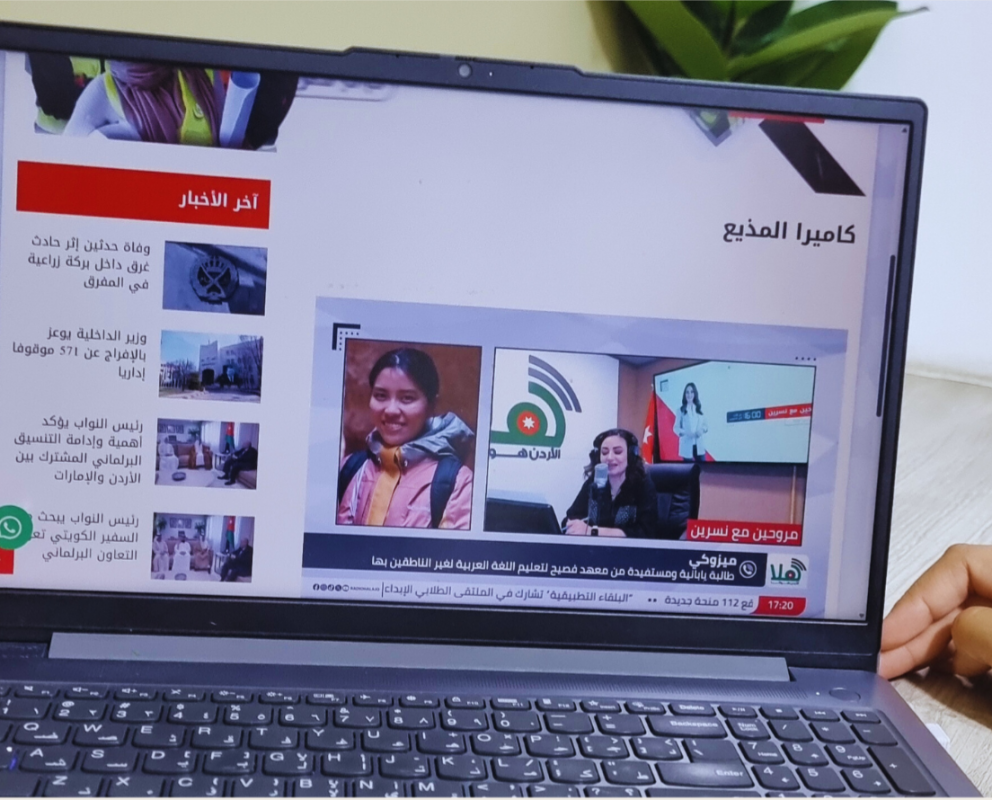
Radio Interview Highlights Faseeh’s Educational Experience
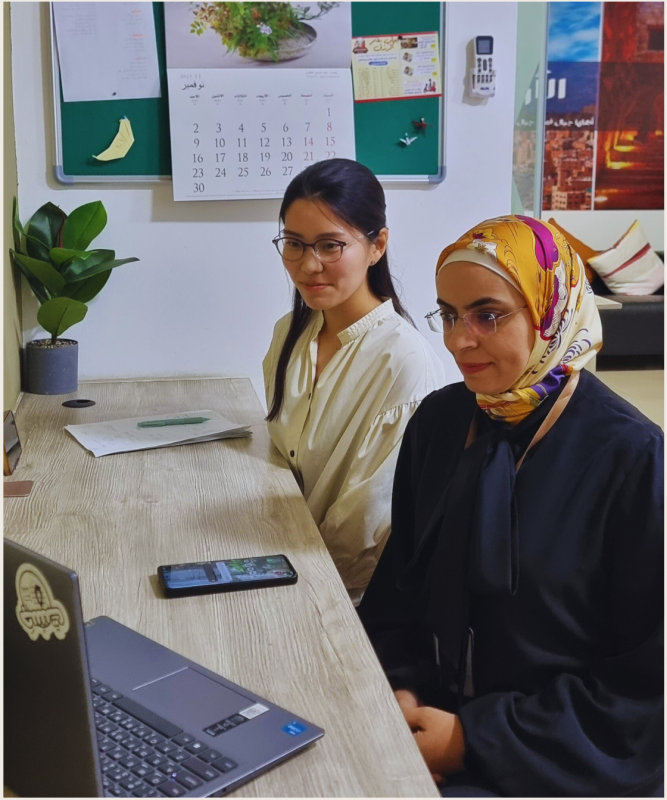
Dr. Sajeda Salem and student Mizuki participated in a radio interview on Hala Radio to discuss teaching Arabic to non-native speakers and the learning experience at Faseeh Institute.
The program highlighted Faseeh’s approach of combining language learning with cultural awareness and daily life in Jordan. Mizuki also shared her personal journey of learning Arabic and her cultural experience in the country.
This participation reflects Faseeh’s mission to promote Arabic as a language of communication, culture, and intercultural dialogue.
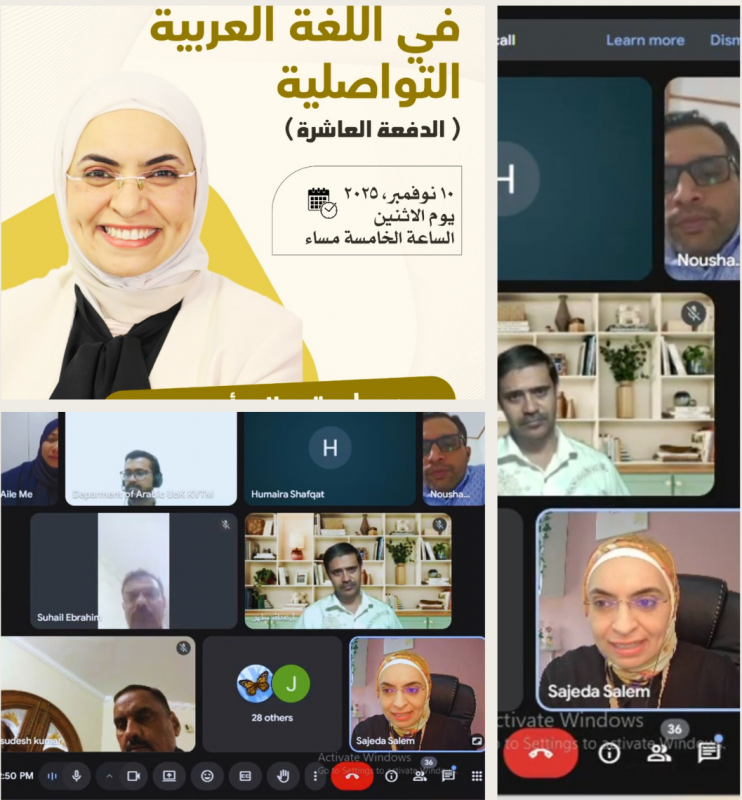
University of Kerala Hosts Dr. Sajeda Salem for the Opening of the Communicative Arabic Diploma
Dr. Sajeda Salem joined online the opening of the Communicative Arabic Diploma at the University of Kerala, India.
In her opening speech, she emphasized Arabic as a language of communication and culture and the need for modern programs that integrate language skills with cultural context.
This participation reflects Faseeh’s support for international academic initiatives.
Faseeh Launches the Ayla Academic & Professional Competition
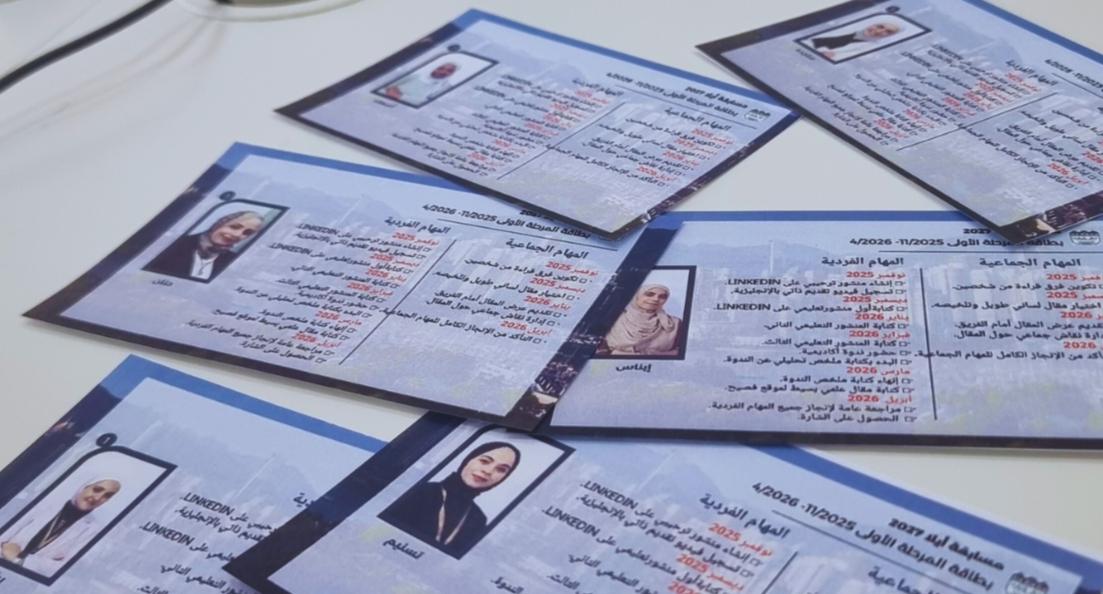
In November, Faseeh Institute launched the “Ayla” Academic and Professional Competition to support teachers’ academic and professional development and promote both collaborative and individual learning.
The first phase began with the distribution of task cards, marking the start of a new development pathway based on research, self-learning, and teamwork in a motivating learning environment.